Cinema club: one film per year, one film a week
Watching The Simpsons with my kids, I realised just how many references to old movies they hadn't seen were in the show. We decided to remedy this with a project to explore the history of film, each week watching a single movie taken from each year in turn since the first film was shot, starting, in the first week, with Roundhay Garden Scene (1888). It went pretty well, so I thought I'd post details incase anyone wanted to try something similar. If you're not bothered about the caveats, cribs, and construction, you can skip to the list avoiding the preamble, but half the fun is probably making your own.
So, I picked movies based on a combination of the following:
- the kids hadn't seen it;
- it was appropriate for kids (see caveats below);
- all the major film movements and developments were represented;
- the films were culturally significant now;
- films that represented quality film-making.
So, below is the list if anyone wants to try something similar; though half the fun is picking for yourself. There's some excellent pages on Wikipedia for each year, which are helpful. The main pages are quite US centred, so we also used the Wikipedia pages listing "British films by year". Generally I took release dates, but each film is +/- a year, as sometimes I cheated and took production dates, and sometimes films went on short pre-releases or were re-released; in some cases, early films are also dated differently by different sources. I tried to make sure non-English language films were represented, though Anglo-American cultural importance generally ruled, as the key idea was to see the foundations of that rather than introduce new stuff (that's another project!). In some cases where a choice was impossible, we watched two films in a year, though we tried to limit ourselves – in some cases it was because a film was important to British culture, but there was also one that was more important to general film development. I've suggested alternatives in some years where we'd already seen the major films. In most cases I got the films on DVD, but I don't doubt a lot can be found online, especially the earlier ones. For the first few years, we actually watched pretty much everything extant that was filmed: there's a good DVD by the BFI, but you rapidly have to start choosing. Info in the list is pulled from the DVDs or linked web sources, with apologies for the lack of space for proper references – I've tried to make personal speculations obvious.
The "child-suitable" rule is probably the hardest to judge if you're doing this yourself – my kids won't be the same as anyone else's, and British kids will be different to those from other places. Some films you think should be disturbing don't bother children, and vice versa. It should be noted that many of the films contain stereotypes and humour you wouldn't find in modern films, but these are a good opportunity to discuss how far we've come with children. I've commented occasionally on content below, but the best thing is to check the parental guidance for each film on IMDb for yourself.
Overall, I think my kids enjoyed it. My eldest was 13 when we started and watched everything. My youngest was 7, watched a lot of silent movies, but dropped out for most of the colour period as they weren't normal, but also weren't exotic. My middle child was 11, and watched almost everything. I found the silent movies to be the hardest ask, so we actually mixed in quite a lot of out-of-sequence Laurel and Hardy, Buster Keaton, and Charlie Chaplin Mutuals, all of which went down well as light relief. Anyhow, here's the list as we did it. Next we're tackling animation and then TV and pop music.
| Year | Film | Notes |
|---|---|---|
| 1888 | Roundhay Garden Scene | Living near Leeds, this short by Louis_Le_Prince, which is widely regarded as the first proper film, was a good starter. There's also Traffic Crossing Leeds Bridge from the same month. |
| 1889 | Monkeyshines | Kinetoscopes were a major advance towards film as we understand it today, and this is the first extant film by Thomas Edison's labs. It begins their significant contribution to the development of film. |
| 1890 | London's Trafalgar Square | Not, perhaps, the most thrilling film from Crofts and Donisthorpe, but, you know, early days... |
| 1891 | Dickson Greeting | Dickson Greeting was probably the first publicly shown film. Also from this year is Men Boxing, likely the first film with sprocket perforations, important to control running speed (and therefore, later, for syncing with sound). |
| 1892 | Pauvre Pierrot | Although shown on a modified praxinoscope, this was well beyond the length of the traditional fixed zoetrope-style animation, and is widely regarded (along with its co-films) as the first animated film, along with the first public presentation of a sprocket perforated film. |
| 1893 | Blacksmith Scene | First staged scene / film acting. |
| 1894 | Annie Oakley | First film of a celebrity? Of equal importance, I suspect, this year are Buffalo Dance, which might be taken as the first documentary film record, and Sandow, the first film to concentrate on the beauty of the (semi)naked human body. Although the technology was abandoned, this is also the year of the first synchronised sound and film: The Dickson Experimental Sound Film. |
| 1895 | The Sprinkler Sprinkled | This film by Louis Lumière of the Lumière brothers is probably the first film story, and comedy. Also important this year are Arrivée des Congressistes à Neuville-sue-Sâlone, probably the first news footage, and Démolition d'un mur and The Execution of Mary Stuart, which include two early special effects – a wall being knocked down and then springing up again as the film is re-played in reverse, and the first use of a stop motion substitution. The latter is also probably the first historical drama. |
| 1896 | The Derby | Shot in 1895, but possibly produced in 1896, probably the first non-staged sports film. It was produced by early film pioneer R.W. Paul. Also important this year is The Haunted Castle, by Georges Méliès, the first horror/vampire film. Méliès was undoubtedly the most inventive of the early film makers, and it's worth watching all of his early work you can get your hands on. |
| 1897 | Niagara | I like the drama of this little film by Louis Lumière. Probably more important are the films The Kiss, After the Ball, and Peeping Tom, which represent the start of a less child-friendly trend in film. 1897 sees a real push in invention in film, as can be seen in this Wikipedia page (it's a shame The Alchemist's Hallucination is lost, it sounds amazing!). This year also saw The Corbett-Fitzsimmons Fight film, claimed as the first film long enough to be a 'feature film' – shown on its own in widespread distribution. |
| 1898 | Dewar's – It's Scotch | First filmed advert. Also interesting this year is Come Along, Do!, which has multiple scenes (albeit the second is only now available as photographs). This year also seems to find the first remake, R.W. Paul's Tommy Atkins in the Park, a remake of the director and Alfred Moul's earlier Soldier's Courtship (1896). Previous films like Monkeyshines (1889) had shot several versions of the same thing, but this seems to be the first attempt to better remake an earlier film. |
| 1899 | The Kiss in the Tunnel | Interesting for its projection instructions, which attempt to produce multiple scenes. Also interesting this year is King John, the first Shakespeare film, and probably the first film based on a literary work still available (I can't find a copy of Don Juan Tenorio (1898), which seems to be the first made). King John starred Herbert Beerbohm Tree, probably the most major actor to appear in a film at that point. This year also sees the first film serial The Dreyfus Affair. |
| 1900 | The Miller and the Sweep | I love these little metaphoric films (and several were made over the next few years), where black and white characters meet and fight, only to end up both grey. Simple, but effective, and, I suspect, the first subtextual films. This one includes an early chase. Also good this year is the action film Explosion of a Motor Car, and Sherlock Holmes Baffled, which is the first Sherlock Holmes movie. This year also seems to feature the first sequel: Grandma's Reading Glass, which appears to be a sequel to Grandma Threading her Needle. Terminator II it ain't. |
| 1901 | The Countryman and the Cinematograph | A nice special effect superimposition giving the first film within a film. Also interesting this year is the fun The Man with the Rubber Head, also using superimposition. |
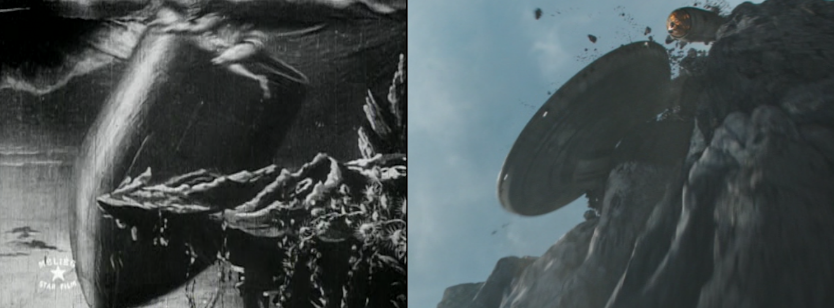
| 1902 | Le Voyage Dans La Lune | Really the first proper motion picture of any sophistication, and the first science fiction film. Some prints were hand coloured. The idea of restarting the spaceship by tippng it over a cliff appears to have been given a nod by Simon Pegg and Doug Jung in Star Trek Beyond, though I've not seen it mentioned. This year also saw the development, albeit momentarily, of true colour film. |
|
||
| 1903 |
The Great Train Robbery The Sick Kitten |
All kinds of dubious claims are made for Porter's Great Train Robbery, but its professional interweaving of narrative and technique, and its box-office success, certainly make it a must for this list. Also a must is "Sick Kitten"; the first funny cat video (though not the first cat video; that was Falling Cat (1894)). |
| 1904 | Buy Your Own Cherries | Probably the most overtly moralistic film so far made. |
| 1905 | Rescued by Rover | The first of many films where an intelligent dog saves the day, the most obvious successor of which is Lassie, and more recently, Bolt. Also good this year are The Living Playing Cards and, for bibliophiles and fans of stream rollers, An Interesting Story. |
| 1906 | Dream of a Rarebit Fiend | Comic strip live action adaptation, warning of the perils of Welsh Rarebit. Ripe for a Marvel-style remake. Also good this year, the clever The Hilarious Posters, and the early documentary A Visit to Peek Frean and Co.'s Biscuit Works. |
| 1907 | That Fatal Sneeze | Sneeze-centred disaster movie. S'nuff said. |
| 1908 | The Physician of the Castle | Suspense-filled melodrama. |
| 1909 | The Fiendish Tenant | A man with a room in his bag goes Cat in the Hat on his landlord. |
| 1910 | A Day in the Life of a Coalminer | Significant early documentary. |
| 1911 | L'Inferno | Running at 1 hour 11 minutes, and widely watched outside of its native Italy, this is regarded as the first feature length blockbuster. Some inconspicuous nudity. DVD available, strangely, with a score by Tangerine Dream. This year also saw the first version of the much-reanimated love-struck Mummy (though not the first mummy ever) – sadly the film is currently lost. |
| 1912 | The Female of the Species | Representative as both an early D.W.Griffith movie, but also an early appearance of Mary Pickford: one of the first global film stars; at one time the highest paid film star; film producer; and, perhaps most importantly, a co-founder of United Artists, the first major distributor to support independent film makers. |
| 1913 | The Bangville Police | First appearance of Mack Sennett's "Keystone Cops". Also interesting this year is Fatty Joins the Force, an early Keystone Cops movie featuring the ill-fated "Fatty" Arbuckle. |
| 1914 | A Thief Catcher | Keystone Cops movie notable for being one of the first, if not the first, appearance of Charlie Chaplin, who we'll see fall on his backside again and again over the next 40 years. |
| 1915 | The Birth of a Nation | First major epic. Despite being 3 hours long, and notoriously racist, it is suprisingly watchable. Good opportunity to discuss racism, and the relationship between morality and art. Stars Lillian Gish, who we'll see again, and who had an immensely long career. It always surprises me how long some of the earliest stars worked – for kids, perhaps the most surprising is Mickey Rooney, who they'll maybe have seen in the Night in the Museum films, and who started acting in silents in 1926. |
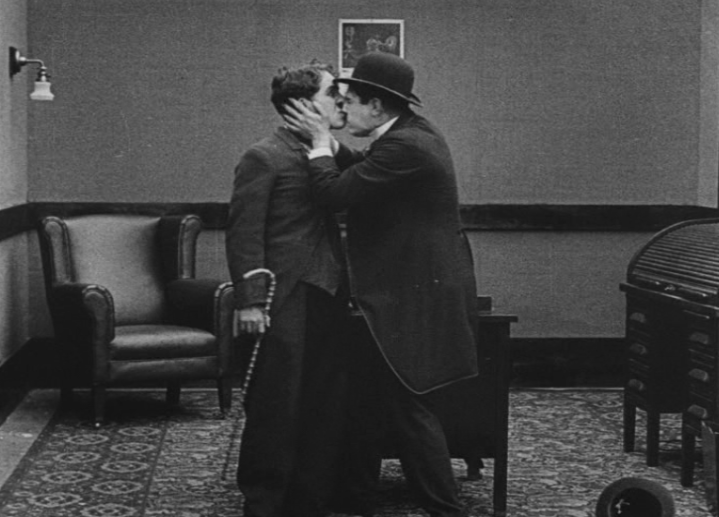
| 1916 | One A.M. | Although we watched all the Chaplin Mutuals, this was probably our favourite. It drags a little towards the end, but the sheer inventiveness of this film, in which a drunk Chaplin tries desperately to go to bed, makes it a classic. People who have been drunk will be filled with a queasy sympathy. Incidentally, I suspect this year also saw the first male-male kiss, despite claims this was in 1927's Wings: Chaplin gets a lip smacking smooch in his first Mutual film, The Floorwalker. |
|
||
| 1917 | The Butcher Boy | Great little slapstick film by Fatty Arbuckle, but perhaps most importantly the first film of Buster Keaton, master of the comedy short. A box set of Keaton is a must. |
| 1918 | The Blue Bird | Where most old films can seem duller than they were to contemporary audiences, time has rendered this yet stranger. |
| 1919 | Eerie Tales | Although some would probably have picked Broken Blossoms for this year, I like this little anthology film: the stories play out well, albeit some of them have somewhat adult themes, and it holds together. Although Intolerance had sub-films, it was really a historical epic. This is the first film that feels like a proper portmanteau movie. |
| 1920 |
The Cabinet of Dr. Caligari The Golem: How He Came into the World |
One of those years where you really need two films. "The Golem" as it is now known (though actually a prequel to a lost 1915 film of that name) is a superb film and a good example of German expressionism, the movement that was to have such an influence on film-making, perhaps especially in the areas of horror and film noir. It rightly gets referenced still in films and TV shows. However, The Cabinet of Dr. Caligari is without doubt the most interesting movie of the time, and the best representative of all the expressionist movies. One to remember when we come back to Edward Scissorhands (1990) later in the list. |
| 1921 | The Kid | We'd watched a few of the Mutual comedies featuring "The Tramp" so we couldn't let this one go by. We'd also already watched the original Addams Family series, so freaked out when we noticed that the eponymous kid grew up to be Uncle Fester! Also of interest this year is Dream Street, which was preceded in some showings by a spoken introduction by D.W.Griffith (you can see some of this in the documentary The Dawn of Sound, available on the 80th Anniversary DVD of The Jazz Singer (1927)). |
| 1922 | Nosferatu | Again, hard to pass by German expressionism without covering this much referenced film. Also notable this year is Nanook of the North and Hal Roach's popular and long lasting Our Gang (a.k.a. the "Little Rascals"). |
| 1923 | Safety Last! | Harold Lloyd hanging from a clock. While Lloyd "only" climbed a few storeys, the long shots were of unprotected free climber Bill Strother, which certainly adds a dimension to watching the film. |
| 1924 | Sherlock Jr. | Fun feature by Buster Keaton, whose deadpan shtick never gets old. Especially amazing as Keaton broke his neck in the railway water tower scene, not realising until years later. It's that kind of thing that makes you realise how physically fit slapstick artists like Keaton and Chaplin were. |
| 1925 | Battleship Potemkin | Hard to imagine a history of cinema without the Odessa Steps in it. Other influencial films this year include The Big Parade. |
| 1926 | The General | Buster Keaton's masterpiece. Worth it for the train sequence alone – I love that the action centres on Keaton's out-of-his-depth hero at the individual scale, while, almost incidentally, a massive civil war battle plays out in the background. |
| 1927 |
Metropolis The Jazz Singer |
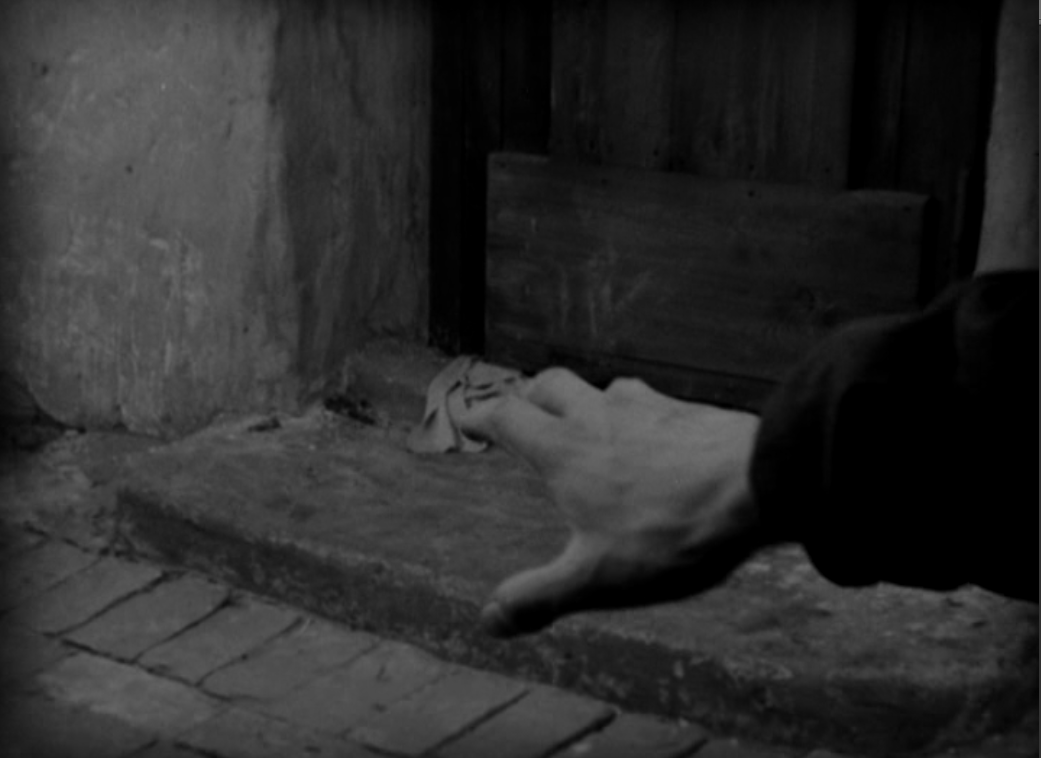
Another year where you just have to watch two films. The influence of Metropolis on science fiction is hard to overestimate. Especially interesting is the sequence shot from the first person perspective, which could be from a modern computer game. However, as the man says, "Wait a minute, wait a minute, you ain't heard nothin' yet!": it would be harder still to overestimate the importance of The Jazz Singer. While the history of sound in film is complicated, and this wasn't the first successful recorded sound film (1926's Don Juan included incidental sounds and a recorded score), with the Jazz Singer Warner Bros. gave us the first widely available "talkie", and showed that sound was attractive to audiences. Within a remarkably short time, the silent movie was dead. Get the 80th Anniversary DVD for a (albeit slightly Warner Bros. perspective) history of early sound, and note the similarities to Sing. Later we'll cover a couple of films that come back to this era. Also an opportunity to talk about blackface, and, if you get the 80th Anniversary DVD, the Mammy stereotype, who looms large on the extras. |
|
||
| 1928 | Steamboat Bill Jr. | Includes possibly the most famous stunt in film history, a building side falling on a precisely positioned Keaton, who passes unharmed through a window. Perhaps as impressive, though, is the astonishing sequence in which a town is torn apart by a cyclone. |
| 1929 | Pandora's Box | On the surface not a child-friendly film, but the themes are played at the 'kept woman' level for most of the film, and no one should go through life without knowing who Louise Brooks was. |
| 1930 |
All Quiet on the Western Front Un Chien Andalou |
Another year where only two will do, though your milage may vary depending on your children. All Quiet on the Western Front is one of the best war films ever made. Like The General (1926), I love that it concentrates on the individual human struggle while humanity's worst epic plays out in the middle distance (quiet interiors with one open wall onto chaos are a particular speciality, though the story of a pair of boots is also hellishly poignant). Un Chien Andalou is equally great, and influential, though some may judge the slicing up eyeballs, nudity, and light fondling, beyond their kids. Personally, in the Venn diagram of The Pixies and Dali, I know exactly where I want my kids to be. |
| 1931 | Frankenstein | James Whale's monster movie is a cultural influence from beginning to end. Unmissable. Would recommend getting one of the "Universal Monsters" box sets and also checking out the classics Dracula, from the same year; 1941's The Wolfman; 1932's The Mummy; and 1954's Creature from the Black Lagoon. Also from 1931 is the largely forgotten and much underrated The Last Flight, which includes dialogue from John Monk Saunders that Tarantino would have been proud of. |
| 1932 | Freaks | Plenty might object to Freaks, but it's ultimately a sympathetic portrayal by a director (Browning) who started out on the sideshow circuit and knew the world well. It's a cult movie for outsiders everywhere, so, altogether now: "Gooba-gobble, gooba-gobble, one of us, one of us!" |
| 1933 |
Duck Soup 42nd Street |
Had to squeeze in the Marx brothers somewhere, and if they were going in, it had to be Duck Soup. 42nd Street had to be in there as an early musical, but also as an early example of the kaleidoscopic choreography of Busby Berkeley. It's also notable as the first starring turn for Ginger Rogers. |
| 1934 | It Happened One Night | Perfect little early screwball comedy directed by Frank Capra, and an nice outing for Clark Gable. Just squeezed in before the Motion Picture Production Code hamstrung Hollywood. |
| 1935 |
The 39 Steps Top Hat |
Another year where it is impossible to choose (they will get less!). The 39 steps is one of the best of the films made by Hitchcock while still making films in Britain, and, more importantly, included his most notable MacGuffin. Top Hat has Fred and Ginger doing what they do best, to the tunes of Irving Berlin: need I say more? Once you've watched this, search out the fabulous You're All the World to Me routine from 1951's Royal Wedding to show, if you still need evidence, just what Fred was capable of. |
| 1936 | Modern Times | Here, The Tramp, first seen in 1914, deals with the struggle of humanity in the industrial age, a theme not much explored since Metropolis (1927). It's a testament to the quality of Chaplin's work that he could continue doing silent characters for almost 10 years after The Jazz Singer (1927) changed everything, well into what feels like a completely different and modernised world. Finally, however, in this film, he breaks, and, of course, when he does, he does it with style: singing a song in glossolalial gibberish. Prisencolinensinainciusol! |
| 1937 | Way Out West | People say 1933's Sons of the Desert is the finest of the Laurel and Hardy films, but for me Way out West has the edge (not least for The Trail of the Lonesome Pine). Frankly, you should do yourself a favour and just watch both, along with 1932's The Music Box (it would be hard to overestimate how hilariously Lilyan Irene getting kicked in the middle of her daily duties is regarded around here). Stan and Ollie have one shtick, but heck, they do it well. The henpecking jokes fall foul (*cough*) of modern sensibilities, but otherwise the duo are still as fresh as a giant water-squirting daisy. Of all the greats from that era they still consistently connect with their audience, not least because of their on-the-money breaking of the fourth wall. |
| 1938 | Bringing Up Baby | Though I was tempted by early noir Angels with Dirty Faces, it really has to be Bringing Up Baby. As screwball comedies go, you can't ask for better than speed-talking Hepburn, repressed Grant, and Hawks as director. We'll see Hepburn being channelled later in 1994 by Jennifer Jason Leigh – you know, for kids. |
| 1939 | Gone With the Wind | It's long, occasionally meandering, and not especially in tune with modern sensibilities, but, frankly my dear, you have to watch it. Our first real colour film; obviously you'd watch the revolutionary Wizard of Oz from this year instead if you haven't seen that, but assuming you have, it has to be Scarlett and Rhett. Also gives you a chance, if you missed it back in 1915 and 1927, to discuss the portrayal of slavery and issues like the Mammy Stereotype. |
| 1940 | The Great Dictator | When Chaplin found his voice, he really found his voice: The Great Dictator containing one of the most impassioned pleas to fight fascism. But his real weapon was right under his nose – never has the similarity between two moustaches been so devastatingly used. Probably the second most important propaganda film of the World War II after 1942's Mrs Miniver, which is also great. |
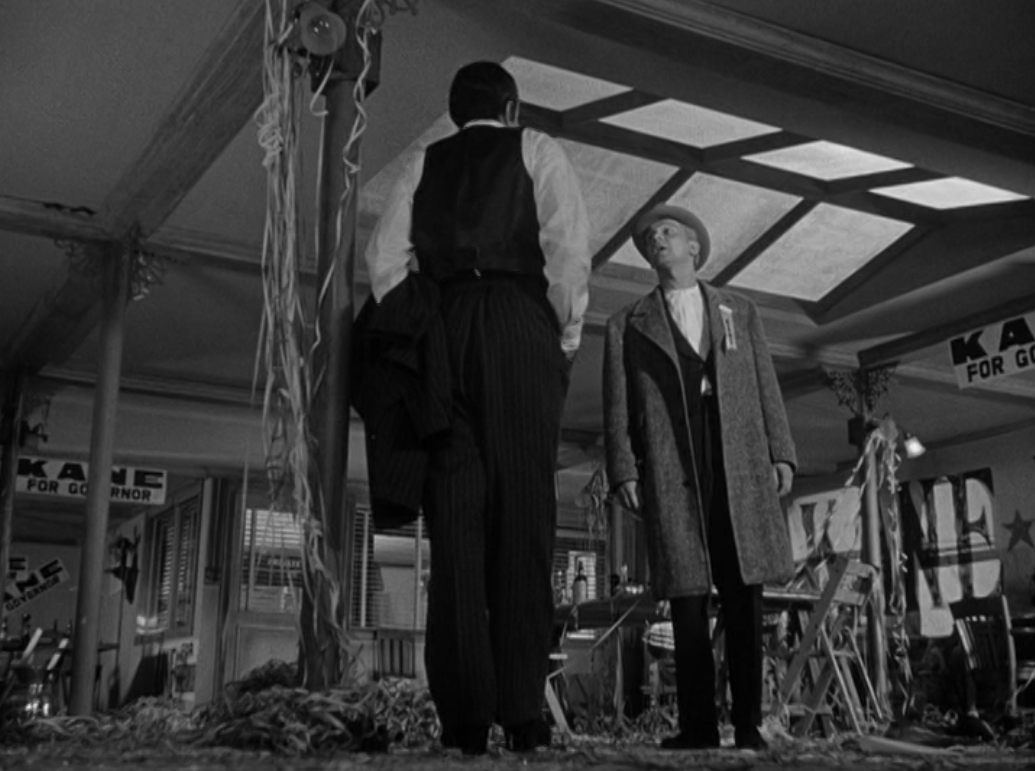
| 1941 | Citizen Kane | Cinema as art, and the use of Mise-en-scène. A good example of how the best film makers use the advantages of the medium to the fullest effect to tell a story. I'd say easy wins here are how Wells uses low angle shots to give the feeling that you're dealing with a time when men were gods, and his use of position in the perspective of scenes to scale actors depending on which temporarily has power (see especially the scene with Leland at ~1 hour in where the changing foreground actor stands tall over the background actor). Once you realise how carefully Wells has constructed every shot, films never seem the same again. |
|
||
| 1942 | Casablanca | Hard not to include the, at the time, hugely influential Mrs Miniver, but Casablanca has it on longevity. The subplot between Renault and the young Bulgarian bride is queasily adult, but the influence and quotability of Casablanca makes it a must for this list. |
| 1943 | The Life and Death of Colonel Blimp | Astonishing wartime film by Powell and Pressburger that was almost guarenteed to offend everyone: the military (who disliked Blimp) and the public (who were presented with a semi-sympathetic German officer). The overarching theme that the British were far too tied to notions of decency, and each generation could rightly fight as dirtily as their enemies demanded, presumably came from Pressburger's first-hand experience of the NAZIs, but it certainly stuck a knife into the moral highground of the "Your Britain Fight For It Now" propaganda of the time. One of those films people probably agreed with more in their hearts than they were prepared to admit; at their peril. A good opportunity to discuss the contribution of film to public debates. |
| 1944 | Arsenic and Old Lace | This film about likable serial killers is about as black as black comedies come. Your 'Child Friendly' mileage may vary. |
| 1945 | Brief Encounter | One of the best romantic movies ever made, and one of the most British films ever: nothing happens, and yet, everything happens. One of those films that gets better as you travel through life, but still a brilliant and touching film about self sacrifice for any age. |
| 1946 | The Big Sleep | As my kids had already seen It's A Wonderful Life, which would otherwise be this year's choice, The Big Sleep gives us the chance to introduce film noir properly. For all its faults, Bogie and Bacall set the standard for the relationship at the centre of noir. Looks back to German expressionism, and looks forward to the space noir sci-fi universes of Bladerunner et al. |
| 1947 | The Secret Life of Walter Mitty | If it had just been me watching, I'd have gone for Black Narcissus without hesitation, but Mitty is essential child-friendly viewing. |
| 1948 | Abbott and Costello Meet Frankenstein | Abbott and Costello had to be here somewhere, and, given they do, Frankenstein seems like the obvious choice, revisiting as it does, the Universal monsters with some classic horror actors. |
| 1949 |
The Third Man Passport to Pimlico |
Given the current Brexit debacle is looking increasingly like an Ealing Comedy, it would be remiss not to watch the most European of the Ealing productions: Passport to Pimlico; in which the inhabitants of Pimlico, London, find out they're French, much to their rationing-dodging delight. Equally, it would be remiss not to include Well's European masterpiece, The Third Man; so, we enjoyed two very different takes on post-war chaos and austerity and watched both. |
| 1950 | Sunset Boulevard | Although there's plenty to choose from this year (not least Harvey), it had to be Sunset Boulevard, not least for its calls out to the old Hollywood set. As well as a stunningly fearless performance by Swanson, cameos include Cecil B. DeMille, who we've somehow managed to avoid in this list, and Buster Keaton. If for no other reason, anyone likely to watch Twin Peaks needs to watch this (and that should be pretty much everyone sooner or later): I waited 26 years for that Gordon Cole payoff. |
| 1951 | The Thing from Another World | I'd hazard a quess that, perhaps with the exception of 1959's Plan 9 from Outer Space (which introduced the zombie as an undead monster rather than just a slave), this is the most influential film ever. Every movie in which people are hunted around corridors by monsters starts here. It's got it all: flamethrowers; an Arctic science base; a giant sentient carrot. The 50's couldn't pass without one B Movie horror. Keep watching the skies! |
| 1952 | Singing in the Rain | Another great year for films, including Angels One Five, Ikiru, and The White Reindeer, but it has to be Singing in the Rain. Not only does this re-tread the early years of talkies, but it's also a great musical, with some stunning slapstick and classic numbers. A genuine hit in our house. |
| 1953 |
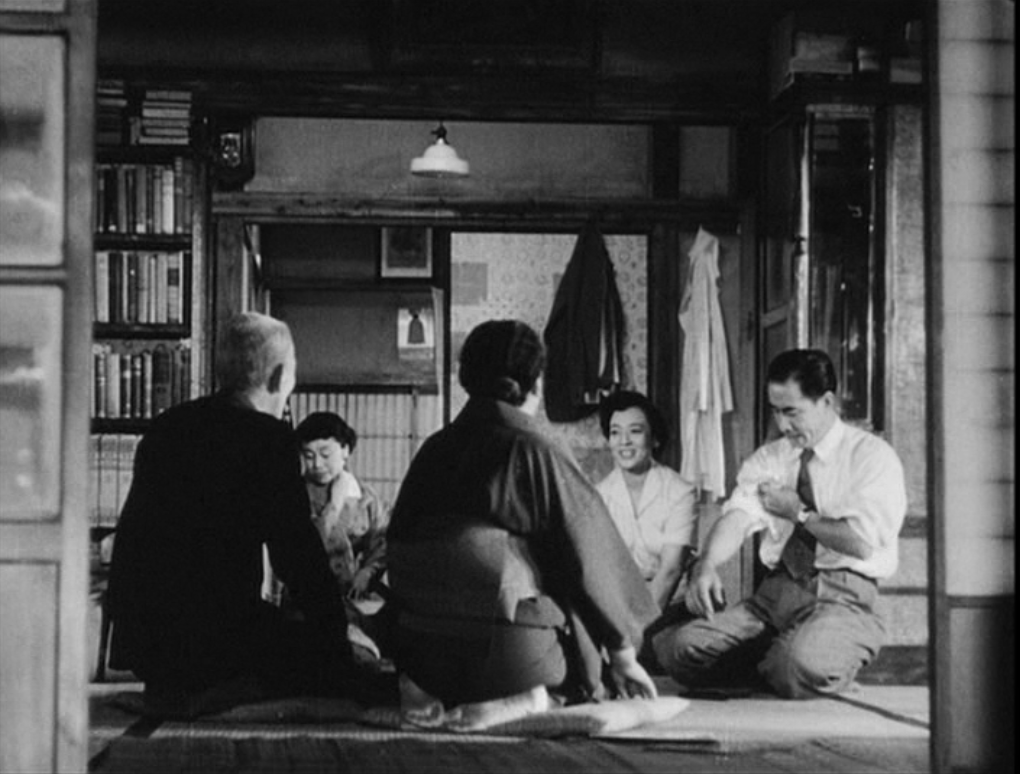
Tokyo Story The Wild One |
Picking up on the quiet inter-generational sorrow of post-war Japan (also seen in 1952's Ikiru), Tokyo Story is a disquietening family film, but well worth the effort. I especially love that it's beautifully shot in a mix of Western perspective and flattened surfaces that replicate traditional Japanese picture screens, and that the film shooting replicates the story, with its tragic meeting of traditional Eastern and modern Western sensibilities. Contrast this with the meeting of rebellious young and conservative old in the American classic The Wild One: more than any other, the film that encapsulated and embedded the rise of the teenager as cultural leader. What are they rebelling against? Whaddaya got? |
|
||
| 1954 | The Belles of St Trinian's | If you're British, you can't not watch the St Trinian's movies. We actually watched 1950's The Happiest Days of Your Life, through to The Great St Trinian's Train Robbery. Some of the sentiments are now a little long in the tooth, but the old movies capture best the absolutely uncontrollable and unprincipled swarm that makes up much of the school. Also this year is Godzilla – but we went for something with real destructive capabilities. |
| 1955 | Kiss Me Deadly The Night of the Hunter Rebel Without a Cause The Dam Busters Blackboard Jungle The Wages Of Fear |
I'm pretty sure I can say with confidence that 1955 was the best year for films ever. It's also about half way through cinema history, and fell on a school holiday for us, so we decided to celebrate the halfway mark by watching a film a day (we actually saved The Wild One (1953) for this week). Kiss Me Deadly is my favourite noir, and while the (not final) reveal could be better handled for a modern audience, the MacGuffin is the best you'll find. Night of the Hunter and Wages of Fear are masterpieces of the sinister and anxious respectively. The Night of the Hunter also features Lillian Gish, who we last saw in 1915! Rebel Without a Cause and Blackboard Jungle are two of the most seminal teen movies ever made; Blackboard Jungle in particular spawning the trope of troubled but bright student vs inspirational teacher. Finally, if you're a Brit, it goes without saying that The Dam Busters is a much referenced must. |
| 1956 | The Red Balloon | Tempted as I was by Invasion of the Body Snatchers, for reasons of quality, special effects, and general referencing, it had to be Le Ballon Rouge. As anyone who has watched Fantastic Beasts: The Crimes of Grindelwald carefully can tell you, it comes from a magical place. |
| 1957 | 12 Angry Men | Though we could easily have gone for influential Bollywood classic Pyaasa, the much re-made re-make An Affair to Remember, or even Gunfight at the O.K. Corral – at least the first and last of which would have filled some serious genre gaps – in the end 12 Angry Men won through on philosophy and style. Shooting largely in one room builds the claustrophobic atmosphere, and I love that Fonda's methodical dissection still allows space for doubt to follow every step. The kind of film that makes people want to be lawyers. |
| 1958 | Seventh Voyage of Sinbad | Again, a great year, with Vertigo, Ice Cold in Alex, and Carve Her Name with Pride all in the running; but in the end we had to have some Harryhausen. |
| 1959 | Some Like It Hot | Wilder's film is funny from start to finish; Curtis and Lemmon are brilliantly paired, and Monroe is at her finest. They say nobody's perfect, but this gets pretty close. |
| 1960 | Psycho | Again, your child-friendly radar may vary, but this is Hitchcock at his best. Of all the movies here, this one notoriously highlights the use of the score to build tension better than any other. People remember the shower scene, but, for my money, Milton climbing the stairs tops it: the film-making twists around leaving your brain with a big hole in it. |
| 1961 | Saturday Night and Sunday Morning | Another great year for film, with Breakfast at Tiffany's, A Taste of Honey, Through a Glass Darkly, and Whistle Down the Wind all falling in this year (with varying suitability). However, I wanted to add a child-friendly kitchen-sink drama, and the only one that is anywhere near suitable is Saturday Night and Sunday Morning, so that's what we went for. |
| 1962 | What Ever Happened to Baby Jane? | If we hadn't already watched Lawrence of Arabia it would certainly have been this year's film, but who can complain about Davis and Crawford acting chunks out of each other? |
| 1963 | The Great Escape | Again, plenty to pick from this year, including The Pink Panther; but McQueen with his baseball reliving his time in the brig must be one of the most referenced scenes in film history. |
| 1964 | Dr Strangelove | My Fair Lady comes a close second, but Strangelove has it this year. The film is almost entirely sexual, so your milage may vary, but not only do you get Kubrick and Sellers, but the fact that Strangelove was broadly based on Von Neumann opens up a whole load of interesting areas. Slim Pickens riding bomb bronco is worth the entry fee alone. |
| 1965 | Alphaville | Probably the only mistake in the list. Had thought it would be good to have some New Wave and some Godard, but this wasn't it. I'm sure the decision to film the future set in the grimmer bits of contemporary Paris seemed like a good one at the time, but it falls flat now, and the treatment of women in the movie shifts it out of the child-friendly catagory. Should probably have gone for the, much underrated, The Hill, or The Ipcress File. |
| 1966 | A Man for All Seasons | Everyone should be forced to watch this film at school, in a pair with reading "To Kill a Mockingbird". What it means to be good, and to be able to look at yourself in the mirror, when people without those comforts are out to destroy you. Written by Robert Bolt, one of the 20th Century's best screenwriters. Beat Zulu to this year's choice. |
| 1967 |
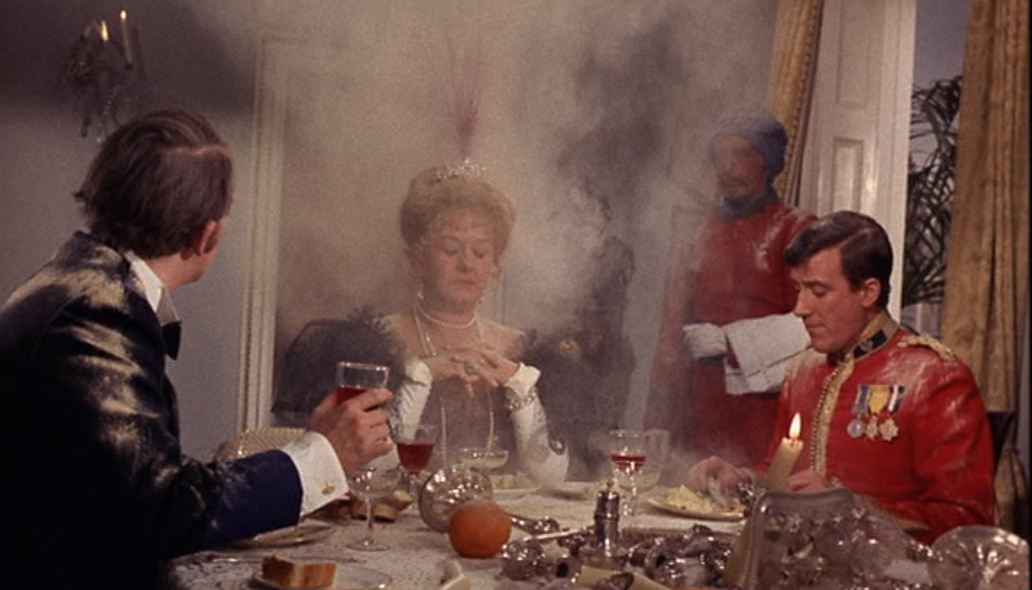
[Carry On] Follow that Camel Carry On Up the Khyber |
The gods of film will have to forgive me for pairing up these two and ignoring In the Heat of the Night, but the Carry On movies are so central to the British psyche, they're unavoidable. Khyber (actually from 1968) is rightly remembered for its stoic dinner party scene, but the British are as affectionately sent up and, to a degree, lauded in the lesser-known Camel. Camel's rather loose attitude to sexual consent strikes a queasy note now, but generally both are on the guilty-pleasure side of the line. |
|
||
| 1968 | Planet of the Apes | What list would be complete without Charlton Heston shouting "Take your stinking paws off me, you damned dirty ape!" or kneeling in despair on the beach? If you haven't seen it, I'd add 2001 as a double-bill. |
| 1969 | The Italian Job | Requires no justification at all. Caine alone puts it on the list. His "coming out" present pushes the boundaries of the family friendly, but that's soon forgotten. |
| 1970 | Tora! Tora! Tora! | Ok, 1953's From Here to Eternity is undoubtedly more iconic, but Tora! shows how to properly make a war film. A Japanese-American production that took an even-handed approach to history, it slowly but steadily builds tension towards the inevitable distruction of Pearl Harbour. |
| 1971 | And now for something completely different | As we'd already seen Solaris, this Monty Python anthology does the job. Although skits like The Lumberjack Song and Chapman's Camp Square-Bashing fall a little queasily on generations now embedded in the seriousness of gender identity, and The Cancerous Black Spot cartoon now takes some historical justification and explaining as vicious satire, overall there's still a lot of fun in this collection, along with some cultural classics. |
| 1972 | The Poseidon Adventure | Just as the 50's wouldn't have been complete without at least one B Movie like The Thing from Another World (1951), the 70's couldn't pass without a couple of disaster movies (for the other, see 1974). Also features Shelley Winters, who we last saw in The Night of the Hunter (1955). |
| 1973 | Soylent Green. | Probably the toughest year to find anything child-friendly in. Live and Let Die should probably have been the choice, but we've seen all the Bond movies. As it is, my eldest watched Soylent Green, which has the iconic importance, but somewhat Alphaville (1965) attitudes to women. The Wicker Man might have been a better choice, if you can put up with Britt Ekland's stunt double's backside. |
| 1974 |
Phaze IV The Towering Inferno |
The Towering Inferno is the disaster movie of the 70's, and includes an all-star ensemble – not least Fred Astaire, who we saw back in 1935. Phaze IV is on the list partly to show the room there was in the 70's for imaginative film-making, but also because, along with 1957's Monolith Monsters, it's one of my favourite horrors. |
| 1975 | Jaws | We have to have some Spielberg, and as we'd seen 1982's ET; 1981's Raiders of the Lost Ark; and 1977's Close Encounters of the Third Kind, it had to be Jaws. Truth told, it had to be Jaws anyhow – every scene is a classic. Not as child-unfriendly as you remember, though your milage may vary. |
| 1976 |
Freaky Friday The Gumball Rally |
Two films spawning a multitude of clones, Freaky Friday started endless "Child in an adult's body"/"Adult in a child's body" films, while Gumball (along with Cannonball) unleashed a wave of car race movies (though of equal influence is 1971's less-child-friendly Vanishing Point). Note that there's a real Gumball race, taking inspiration in part from the movie, but also from the Cannonball Baker runs and Erwin "Cannonball" Baker. |
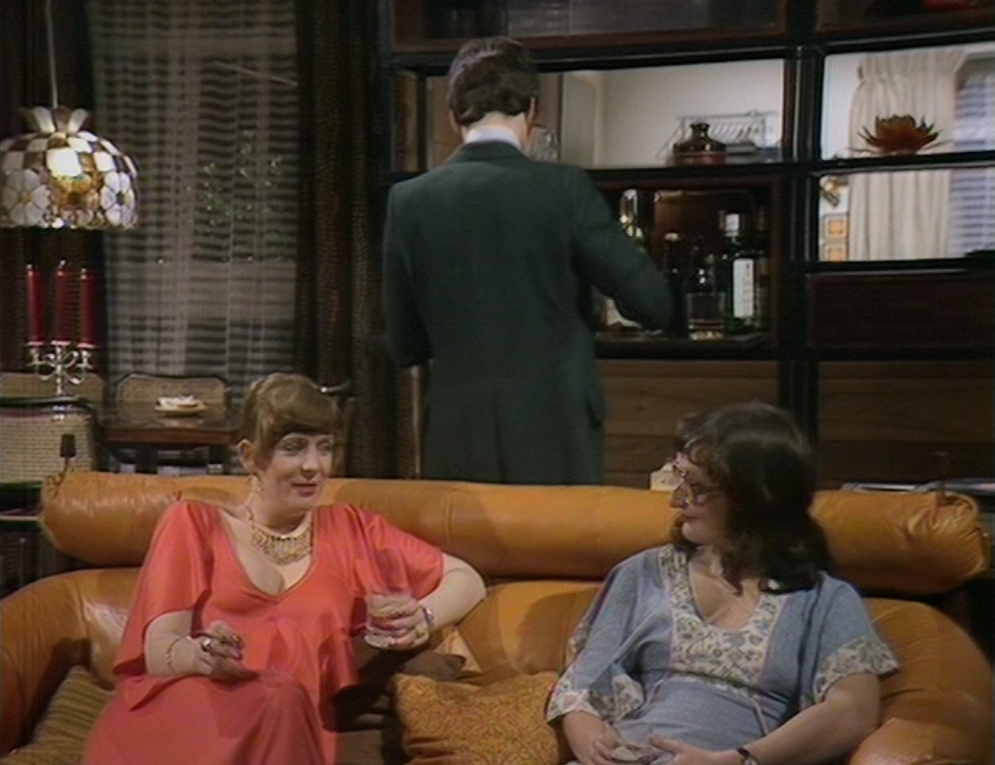
| 1977 | Abigail's Party | This is a slight cheat as it's actually a TV movie, but it is one of the more important films of the 1970s: this is Who's Afraid of Virginia Woolf? for the Demis Roussos set. Like a lot of Leigh's early work, Abigail's Party can now feel like an unfortunate dismissal of working and lower-middle class aspirations, but, for my money, it just uses the familiar to contextualise an important dissection of how aspiration, pretension, and personal development interlock. In the unlikely event you haven't seen Star Wars, it's an alternative, but make sure to then watch The Hidden Fortress (1958) for the full film-buff effect. Also this year is The Spy Who Loved Me – for me, the best of the old Bonds, with every sentence either a technical element or a roistering innuendo of the most outrageous kind. Also has a car that turns into a sub, the best Bond theme, and an introduction sequence to make you spit out your popcorn with spluttering delight: makes me feel sad for the rest. |
|
||
| 1978 | Big Wednesday | Covering both the coming-of-age and Vietnam movie genres, the much underrated Big Wednesday also stands alone as a great film. Have to admit I'd forgotten the gloriously outrageous phallic ending. |
| 1979 | The China Syndrome | A great example of the investigative drama, which ranges from 1976's All the President's Men to 2000's Erin Brockovich and beyond. While The China Syndrome doesn't have the advantage of being based on a real investigation like many, it carries the drama well, and has an interesting tie in with Three Mile Island. Hard to deny the combination of Fonda, Douglas, and Lemmon. |
| 1980 | The Elephant Man | Lynch is, by a long long way, my favourite director. Guttingly, despite containing almost nothing on paper that's not child-friendly, 1977's Eraserhead is the least child-friendly film you're ever likely to see. Given this, The Elephant Man is a good backup. Containing a great cast of A-List British actors, and enough Lynch to give a flavour, it's also a standout performance by The War Doctor. |
| 1981 | Chariots of Fire | Worth it for the theme tune at the very least. |
| 1982 | Gandi | Having already seen Bladerunner, surely one of the most influential films ever, Gandi seemed a solid second choice – everyone should know about Gandi, no? Might have gone for The Draughtsman's Contract otherwise, as it would be good to have a Greenaway in there, and it is about the only one not chock full of sex and violence, although, ironically, it's all about both. |
| 1983 | Merry Christmas Mr Lawrence | Ok, so the start, though quietly handled, isn't especially child-friendly, but a standout score by Ryuichi Sakamoto (who stars) and a great cast make this unmissable. I've never seen a bad Beat Takeshi movie. |
| 1984 | The Karate Kid | Endlessly referable. Obviously, if you haven't seen Ghostbusters, that's also a must. |
| 1985 |
Brazil Pee-wee's Big Adventure |
Brazil is one of those movies that you feel like you're living in at points in your life. It's up there with finding yourself in Kafka's Trial. However, we also needed a road movie, and Burton's outing is one of the greats (along with the too much ignored, but less child friendly Fandango). The love scene inside the dinosaur is one of the best, up there with Kermit and Miss Piggy hanging upsidedown over a cliff in Muppet Treasure Island. |
| 1986 | Pretty in Pink | We couldn't let the 80's pass without a John Hughes movie, and this is about the most child-friendly. One day, I'll show them The Breakfast Club, despite what Ally Sheedy suffers in the last 5 minutes (*weaps*). |
| 1987 | Wings of Desire | The first 20 minutes of Wings of Desire is some of my favourite film-making; follow it up with Everybody Hurts. You'll need to explain who Columbo is before you watch it though. Also this year is The Princess Bride, which everyone needs to see at some point. |
| 1988 | Who Framed Roger Rabbit | Ah, if only They Live was more child-friendly. |
| 1989 | Bill & Ted's Excellent Adventure | Did consider Field of Dreams, but Bill S. Preston and Ted "Theodore" Logan storm it on influence. Gets a good name-check in a recent blockbuster. |
| 1990 |
Edward Scissorhands Rosencrantz & Guildenstern Are Dead |
Tim Burton's classic harks all the way back to The Cabinet of Dr. Caligari (1920), but I couldn't not include Stoppard's continually smart take on Hamlet. Oldman and Roth when they were the coolest young bucks on the planet. Have to admit, we also snuck in the much under-rated Welcome Home, Roxy Carmichael, the antidote for the end of The Breakfast Club, for some outsider positivity. |
| 1991 | The Addams Family | But watch the series first. |
| 1992 | Wayne's World | If nothing else, it explains why everyone chuckles during the Ray Foster scene in Bohemian Rhapsody. |
| 1993 |
Groundhog Day The Remains of the Day |
We had to get in at least one Merchant Ivory costume drama, and The Remains of the Day is the crippling flip side of the stiff upper lip dinner party scene from Carry On Up The Khyber (1968). However, Groundhog Day has to be on the list as an original that's still a cultural lodestone now. |
| 1994 | The Hudsucker Proxy | The Cohen Brothers, but, you know, for kids! Don't, whatever you do, let anyone see the DVD box – it gives away a major twist; grr. Easily my favourite Cohens movie, with some great set pieces, and a great counterpoint to Brazil (1985), Leigh and Robbins play, respectively, electric wisecracker and wide-eyed innocent to perfection, taking us all the way back to Bringing Up Baby (1938). Given the choice between this and the sentimental celebration that is Gump, there's really no contest. |
| 1995 | Clueless | Heckerling's resetting of Emma captured point-perfectly the unveiled horror of teen culture once it had eaten the world; albeit balancing the horror with a degree of sympathy. The comparison with Rebel Without a Cause (1955), sitting at the other end of the teenage tidal wave, couldn't be starker. The lack of irony with which her catchphrases entered common usage only reenforced the importance of the movie. Spawned a host of re-settings and modernisations of literary works. |
| 1996 | Brassed Off | We had to include at least one British comedy-drama from the new wave of anti-Thatcherite kitchen-sink films of the 90s, and Brassed Off is probably the first and best. |
| 1997 | Titanic | Titanic by name, Titanic by nature. As hard to avoid as, well, an iceberg. DiCaprio and everyone's favourite daughter of Reading save this from turning into an unfortunate metaphor. |
| 1998 | The Truman Show | Disturbing idea somehow turned into a light-hearted film. |
| 1999 | The Sixth Sense | Although this has some moments that may scare smaller children, it's the closest to a genuine modern horror that is still pretty child-friendly. Obviously worth it for the ending. |
| 2000 | Crouching Tiger, Hidden Dragon | We'd already seen Unbreakable, almost certainly my favourite superhero movie, so the gloriously shot Crouching Tiger, Hidden Dragon had to go in the list as a great example of a historical martial arts movie. |
| 2001 | A Beautiful Mind | Spys, madness, maths, and a true story. What more could you want from a film? |
| 2002 | Minority Report | Influential in the area of computer interaction, and full of interesting ethical issues, Minority Report keeps giving. |
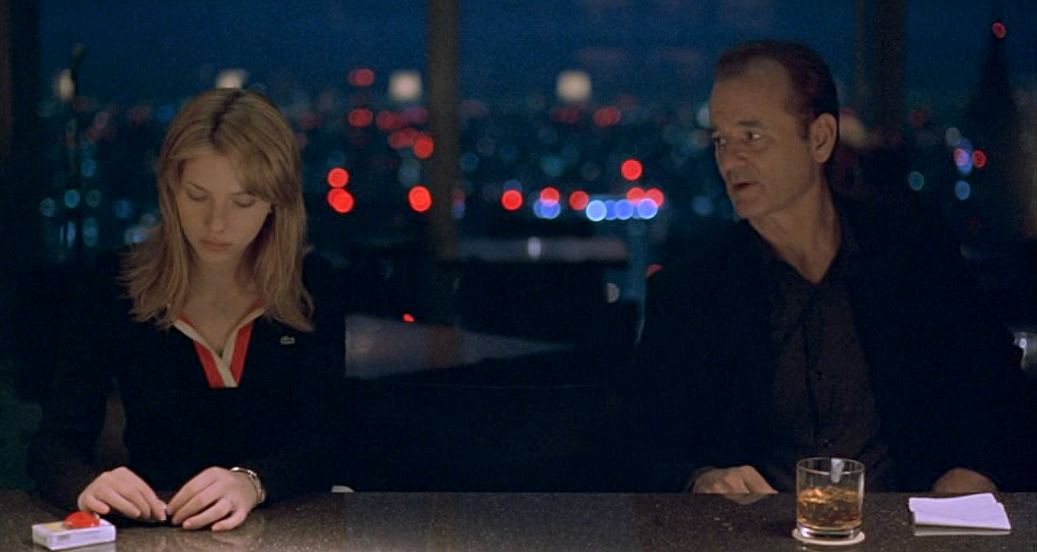
| 2003 | Lost in Translation | Although criticized for its portrayal of the Japanese, for me, the quiet emotional relationship between the two main characters transcends the specifics of the setting. Traditional film notions of love and lust are thrown out in a way not seen since Brief Encounter (1945), and we're left with something new and achingly touching. |
|
||
| 2004 | Sky Captain and the World of Tomorrow | Representative of a major threshold in film-making: the shift in technology costs such that high-quality editing and effects are now available to people in their homes. Although Conran had training in film-making, the initial pilot for the film was a home-brewed effort. Won't give away the baddy, but it features a technique well ahead of its time. |
| 2005 | Corpse Bride | Fun, and representative of the high quality of modern stop-motion animation (given we'd already seen everything Wallace and Gromit). |
| 2006 | The Queen | Maybe a slightly strange choice, but brilliantly acted by Mirren and Sheen, and gives a good summary of an important, if odd, period for the UK's collective psyche. |
| 2007 | And When Did You Last See Your Father? | Picked initially for local interest, I'd forgotten just what a great film about death this is: realistic, evenhanded, and touching without being sentimental, this does a great job of capturing the spirit of Blake Morrison's work. |
| 2008 | Son of Rambow | Fun movie about film-making. I wonder how long they debated using the Screen test theme tune before deciding against it? |
| 2009 | Whip it | I was sorely tempted by Agora, but Whip It won for its attitude. Perhaps taking a little something from the Rocky films, Barrymore redefines winning: sports competitions are lost; people get bruised; relationships are told to take a hike; but despite it all the main characters still come out having won at everything actually worth caring about. |
| 2010 | Scott Pilgrim vs. the World | I really wanted this to be Le Quattro Volte, but, probably doing my kids a disservice, thought that after two years of my film taste, this might be pushing everyone's limits. Scott Pilgrim is fun, and has a sensibility that encompasses everything from 80's chiptunes to modern anime, somehow staying on the right side of cool throughout. |
| 2011 | The Artist | We end where we started, back in the silent era, with tone and effects to match and a film that shows again how good cinematography and physical storytelling can hold the attention all on their own. A film that takes over 100 years of knowledge and techniques and builds an absolute blinder. |